46 destroyed, nine saved
The programme was a success, and Chrysler still didn’t build the car. Then it destroyed most of the fleet, and nobody quite agrees why.
So why wasn’t it built?
The next step was meant to be 500 turbine cars, using a design that became the 1966 Dodge Charger, but tightening pollution rules pushed it aside. Hemmings, 2018
Huebner said Chrysler had bought tooling and laid out a line for a larger run of 1966 models, and production plans lasted into 1973 and 1974, until the money ran out. Hemmings (Michael Lamm)
Rosenbusch says gearing up a plant to build 100,000 a year simply wasn’t realistic. Hagerty, March 2021
The Smithsonian names poor fuel efficiency, high emissions and a peculiar lag when accelerating as what killed its chances of mass production. Smithsonian
The Henry Ford says rising petrol prices ultimately killed the turbine dream. The Henry Ford
The end of the fleet
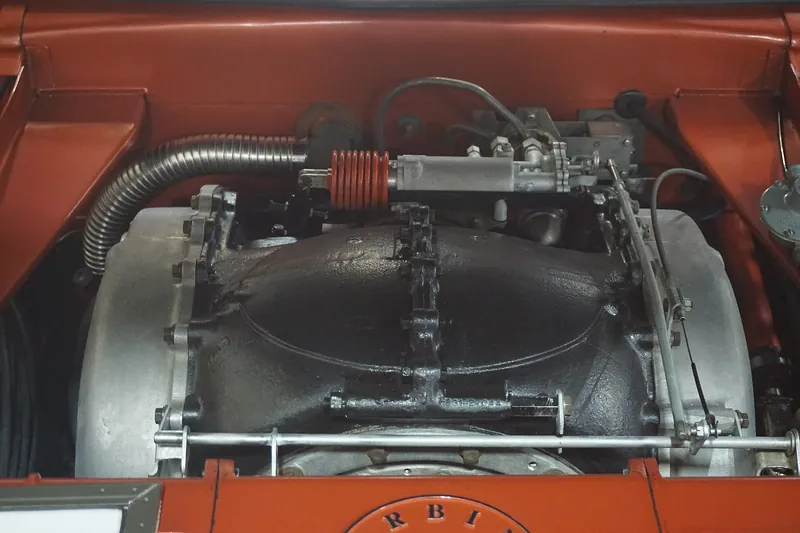
When the loans ended, Chrysler kept three cars, deactivated six for museums, each with a crated engine and transmission for display, and sent the rest to a Detroit scrapyard. Hagerty, March 2021
Bill Carry, who worked on the project, went to the scrapyard and watched them burned and crushed. Hemmings (Strohl), 2013
Only nine survive. Chrysler kept three and gave six to museums; the other 46 were destroyed. Road & Track (Steve Lehto), 2021
Why destroy them? Sources differ
This is the most argued-over part of the story. The import-duty explanation is the one you will hear most often; people who worked on or have studied the programme mostly reject it as the main reason.
The import-duty explanation
- Lehto wrote in 2021 that Chrysler had paid only temporary import duties on most of the cars, so they had to be destroyed or shipped out of the country. Road & Track (Steve Lehto), 2021
- A Hemmings engine article also says Chrysler destroyed all but nine to avoid hefty import duties. Hemmings (Mark McCourt)
- Leno says the Ghia bodies came in under a temporary tax exemption, so Chrysler had to pay the tax or crush them, and chose the crusher. Hagerty (Jay Leno), 2021
The keep-control explanation
- Carry, writing in 2013, remembered the duty had dropped to next to nothing by then. The decision was about control: nobody wanted Turbine bodies running round with piston engines in them. Hemmings (Strohl), 2013
- Olson estimated the duty at under $500 a car at worst, and said Chrysler always destroyed prototypes. Hemmings (Strohl), 2013
- Hemmings adds that if duty was due, it must have been paid on the nine survivors, and Chrysler had been willing to give every car to a museum. Hemmings (Strohl), 2013
- Rosenbusch says Chrysler, like every carmaker, didn’t want prototypes on the road, or someone swapping in a 318 or a Hemi, and that most were not destroyed to dodge import tariffs. Hagerty, March 2021
- Strohl’s 2013 summary: Chrysler mainly feared that untrained mechanics would service the engines badly and give turbines a poor name. Hemmings (Daniel Strohl), 2013
Weighing the evidence, we think duty may have played a part, but the better-supported reason is that Chrysler did not want its prototypes loose in the world. Both views are given here so you can judge.
The nine survivors
Lehto lists the six museum cars as going to The Henry Ford, the Smithsonian, the Natural History Museum of Los Angeles, the National Museum of Transportation in St. Louis, the Detroit Historical Society and Harrah’s National Automobile Museum in Reno. Road & Track (Steve Lehto), 2021
The museum cars were not in running order, but each museum also got a crated engine. St. Louis swapped its crate engine in and got its car running. Road & Track (Steve Lehto), 2021
The Harrah car
Harrah’s car, number 991231, was sold after Bill Harrah’s death in 1978. Domino’s Pizza founder Tom Monaghan bought it, then sold it to Frank Kleptz in the late 1980s. Hagerty, April 2021
Bill Harrah’s collection in Reno also held the only surviving Dymaxion car, which is still there today; its story is on dymaxion.motoring.im.
How was the Harrah car made to run? Sources differ
- Hagerty says Kleptz had GE Engine Services rebuild its engine so it would run again. Hagerty, March 2021
- Lehto says Jay Leno phoned friends at Chrysler and found Kleptz a working turbine. Road & Track (Steve Lehto), 2021
In 2021 it was sold through Hyman Ltd and unveiled at Stahls Auto Museum in Chesterfield, Michigan, which promised to start and drive it. Hagerty, April 2021
Chrysler’s own cars
Leno bought one of Chrysler’s own cars in 2009, during Chrysler’s bankruptcy. Hagerty (Jay Leno), 2021
Does Chrysler own two or three? Sources differ
- Rosenbusch, in 2021, said Chrysler still owned two; the third had gone to Leno after the Walter P. Chrysler Museum closed. Hagerty, March 2021
- One Hemmings article, last updated in 2024, still says the company owns three. Hemmings (Mark McCourt)
- Lehto’s count in autumn 2021: five run (Leno’s, Chrysler’s two, St. Louis and Stahls) and four don’t (the Smithsonian, Los Angeles, Detroit Historical Society and The Henry Ford cars). Road & Track (Steve Lehto), 2021
The 2021 sources agree that Chrysler kept two after selling one to Leno, so we go with two. Leno dates his purchase to 2009; Rosenbusch links it to the museum’s closure.
Nine survivors, or ten? Sources differ
- Only nine survive. Chrysler kept three and gave six to museums; the other 46 were destroyed. Road & Track (Steve Lehto), 2021
- The Detroit Historical Museum’s own release said its car was “one of 10 remaining”. Detroit Historical Museum
Where they are now
We only name a place where a source we could check says so, and we give the date of that source. Museum cars move around, so Lehto advises calling ahead before visiting. Road & Track (Steve Lehto), 2021
| Chrysler (Stellantis), two cars | Rosenbusch, in 2021, said Chrysler still owned two; the third had gone to Leno after the Walter P. Chrysler Museum closed. Hagerty, March 2021 In June 2025 a 1963 Chrysler Turbine was among a dozen historic cars that journalists could drive or ride in at Chrysler’s centenary event on Detroit’s Belle Isle. Stellantis, 2025 |
|---|---|
| Jay Leno, private | Leno bought one of Chrysler’s own cars in 2009, during Chrysler’s bankruptcy. Hagerty (Jay Leno), 2021 |
| Stahls Automotive Foundation, Chesterfield, Michigan | In 2021 it was sold through Hyman Ltd and unveiled at Stahls Auto Museum in Chesterfield, Michigan, which promised to start and drive it. Hagerty, April 2021 Stahls says the car is on display there, and visitors can see it and sometimes hear it. Stahls |
| The Henry Ford, Dearborn, Michigan | The Henry Ford lists its car, a gift of Chrysler, in the Driving America exhibit in Dearborn, Michigan. The Henry Ford |
| National Museum of Transportation, St. Louis | The National Museum of Transportation in St. Louis lists its 1963 Turbine Car in its collection. National Museum of Transportation |
| Smithsonian, Washington | The Smithsonian’s car, a gift of Chrysler, is currently not on display. Smithsonian |
| Detroit Historical Society | CBS Detroit reported that the Detroit Historical Museum would show its car from mid-October 2025 to August 2026, during Chrysler’s centenary. CBS Detroit, 2025 |
| Los Angeles | Hagerty says the Los Angeles car went to the Natural History Museum of Los Angeles, now the Petersen Automotive Museum. Hagerty, March 2021 |
Lehto’s count in autumn 2021: five run (Leno’s, Chrysler’s two, St. Louis and Stahls) and four don’t (the Smithsonian, Los Angeles, Detroit Historical Society and The Henry Ford cars). Road & Track (Steve Lehto), 2021
We could not find a current page from the Petersen Automotive Museum confirming that it still holds or shows the Los Angeles car, so we don’t say so.
Chrysler’s turbine work went on
Chrysler kept going through seven generations of turbine, in trucks, pickups, Aspens and Volarés. The last two cars were a 1978 LeBaron and a 1981 Dodge Mirada. Hagerty, March 2021
Lamm says the seventh-generation turbine Mirada of 1981 passed emissions standards that did not come into force until the 1989 model year. Hemmings (Michael Lamm)
Chrysler’s turbine know-how found a home in the M1 Abrams tank, originally designed by Chrysler. Hemmings, 2018
When did the turbine programme end? Sources differ
- Stahls says the turbine programme ended in 1979, largely over emissions rules, poor fuel economy and as a condition of a government loan. Stahls
- The Henry Ford also gives 1979. The Henry Ford (Matt Anderson)
- Hemmings dates the end to 1981, for lack of funding. Hemmings (Mark McCourt)
Remembered
In June 2022 the Hagerty Drivers Foundation added the Chrysler Turbine to the US National Historic Vehicle Register. Hagerty, 2023
For the 50th anniversary in 2013, Chrysler made a one-off matt bronze 300S with turbine-style wheels. It had a V-6. Hemmings (Daniel Strohl), 2013
The survivors are identical apart from details such as their numbers. Even the key pattern is the same on every car. Road & Track (Steve Lehto), 2021
Timeline
- 1966 When the loans ended, Chrysler kept three cars, deactivated six for museums, each with a crated engine and transmission for display, and sent the rest to a Detroit scrapyard. Hagerty, March 2021
- 1978 Harrah’s car, number 991231, was sold after Bill Harrah’s death in 1978. Domino’s Pizza founder Tom Monaghan bought it, then sold it to Frank Kleptz in the late 1980s. Hagerty, April 2021
- 1979 or 1981 Stahls says the turbine programme ended in 1979, largely over emissions rules, poor fuel economy and as a condition of a government loan. Stahls Hemmings dates the end to 1981, for lack of funding. Hemmings (Mark McCourt)
- 2009 Leno bought one of Chrysler’s own cars in 2009, during Chrysler’s bankruptcy. Hagerty (Jay Leno), 2021
- 2021 In 2021 it was sold through Hyman Ltd and unveiled at Stahls Auto Museum in Chesterfield, Michigan, which promised to start and drive it. Hagerty, April 2021
- 2022 In June 2022 the Hagerty Drivers Foundation added the Chrysler Turbine to the US National Historic Vehicle Register. Hagerty, 2023
- 2025 In June 2025 a 1963 Chrysler Turbine was among a dozen historic cars that journalists could drive or ride in at Chrysler’s centenary event on Detroit’s Belle Isle. Stellantis, 2025
Next: myths vs facts →