The Chrysler Turbine Car: a jet-age engine in your driveway.
In 1963 Chrysler did something no carmaker had done. It built 50 identical, bronze, Italian-bodied coupes powered by gas turbines, and lent them free to ordinary American drivers for three months at a time. 203 people took part. Afterwards almost all the cars were destroyed. Here is what actually happened, with every fact linked to its source, and the tall tales checked.
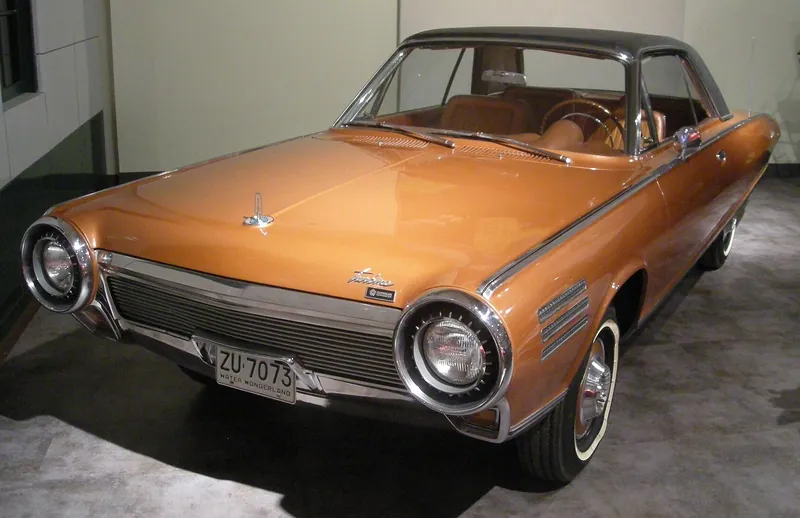
The 1963–64 loan cars, not the earlier experiments. As The Henry Ford puts it, many companies tried gas turbine cars after the war, but only Chrysler put them in the public’s hands. The Henry Ford This site is about the 55 Ghia-bodied cars of 1962 to 1964 and the public loan programme of 1963 to 1966. Chrysler’s 1950s turbine Plymouths are backstory here.
General Motors began its own turbine programme in 1951 and showed turbine-powered Firebird show cars in the mid-1950s. Hemmings (Michael Lamm) Those were show cars, and a different story. They were never for sale. Users had unrestricted use of a car for up to three months, in return for keeping it in good order and reporting back to Chrysler. Hemmings, 2018 And it has nothing to do with today’s electric cars or anything else badged “turbine”.
The short version
Chrysler built 55 metallic bronze two-door hardtops powered by gas turbines. Their bodies were hand-built in Italy by Carrozzeria Ghia in 1963 and 1964. Hemmings (Mark McCourt)
Of the 55, five were prototypes built in 1962 and used for troubleshooting, each slightly different. The other 50 were identical, built between October 1963 and October 1964. National Museum of Transportation
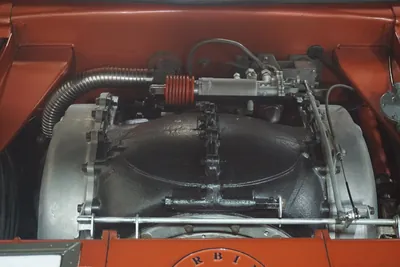
The engine was Chrysler’s fourth-generation gas turbine, designated A-831. Hemmings (Mark McCourt) Power went to the rear wheels through a modified three-speed TorqueFlite automatic with no torque converter. Hagerty Drivers Foundation
Chrysler announced the loan plan on 14 May 1963. Within six weeks 30,000 people had written in asking to take part; 203 drivers were chosen, 23 of them women. Hemmings (Michael Lamm) The public programme began on 29 October 1963 and ran for 27 months, ending in January 1966. Hemmings (Michael Lamm)
The 203 drivers lived in 133 cities across the United States, and between them drove more than a million miles. Stahls
The Henry Ford sums it up: users loved the low maintenance and lack of vibration, but complained about slow acceleration and poor fuel economy. The Henry Ford
Only nine survive. Chrysler kept three and gave six to museums; the other 46 were destroyed. Road & Track (Steve Lehto), 2021
Explore the story
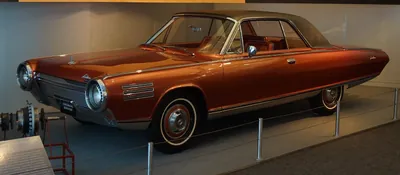 The storyFrom a wartime aircraft engine to 50 bronze coupes.
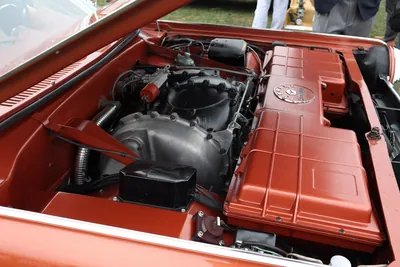 How it workedTwo turbines, a blowtorch and a pair of spinning regenerators.
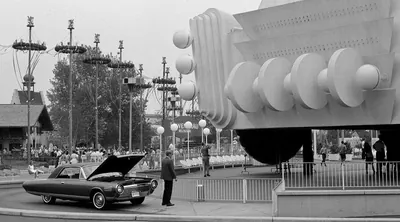 The loan programme30,000 volunteers, 203 drivers, three months each.
 What happenedWhy 46 were destroyed, and where the nine survivors are.
Tile pictures are credited on their pages and on the credits page.